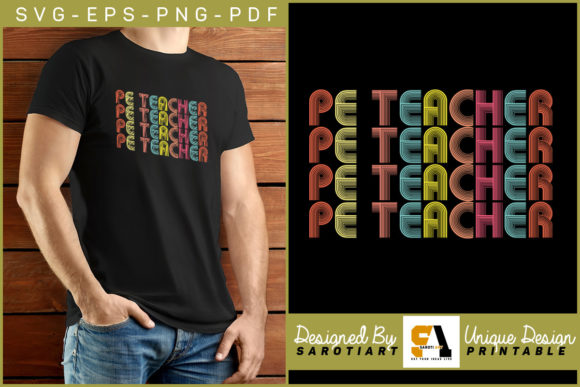
Understanding the PE Teacher Definition T-shirt Design for Creative Projects
For physical education teachers, coaches, and fitness enthusiasts, apparel is more than just clothing; it is a statement of identity. The PE Teacher Definition T-shirt Design has emerged as a popular graphic choice because it humorously and accurately captures the essence of the profession. Whether you are a seasoned educator looking to update your wardrobe or a small business owner creating custom merchandise for a school event, understanding how to properly utilize this digital asset is crucial for achieving professional results.
This specific design, crafted by Sarotiart, offers a unique and creative take on the classic definition format. It appeals to those who support special day occasions, from teacher appreciation weeks to end-of-year celebrations. However, many buyers make critical errors when purchasing and implementing digital design files. These mistakes can lead to wasted time, poor print quality, and frustration. By understanding the nuances of digital file formats and printing requirements, you can ensure your final product looks exactly as intended.
The Trap of Ignoring File Formats
One of the most common misunderstandings among beginners is treating all digital image files as equal. When you purchase the PE Teacher Definition T-shirt Design, you receive a zip compressed folder containing EPS, SVG, PDF, and PNG files. Using the wrong file for your specific project is a frequent error that compromises quality.
For instance, if you attempt to enlarge a standard PNG file for a large banner or poster, you will likely encounter pixelation. PNGs are raster images, meaning they are made of pixels. While they are excellent for web use or simple home printing at standard sizes, they do not scale infinitely. In contrast, vector files like EPS and SVG are composed of mathematical paths. This allows them to be resized to any dimension without losing clarity. If you are sending your design to a professional printer for bulk t-shirt production, always provide the vector file. Failing to do so may result in blurry edges and an unprofessional appearance, which reflects poorly on your brand or personal presentation.
Overlooking Licensing and Usage Rights
Another significant oversight involves the scope of usage. Many creators assume that buying a digital file grants them unlimited commercial rights without restrictions. While this design is suitable for t-shirts, posters, scrapbooking, stickers, clothes printing, printable decorations, cards, invitation designs, and social media banners, it is essential to read the specific terms provided by the artist.
Using a design beyond its intended license can lead to legal complications or account suspensions on print-on-demand platforms. For example, if you plan to sell thousands of units, verify if there is a cap on sales volume. Additionally, remember that the mockups shown in online listings are for demonstration purposes only. The actual purchase does not include blank shirts, mugs, or other physical items. Assuming otherwise leads to confusion upon delivery. Always clarify that you are buying a digital file, not a physical product, to manage expectations correctly.
Misjudging Print Compatibility
Different printing methods require different file preparations. A mistake often made by hobbyists is using a complex multi-color design for heat transfer vinyl (HTV) cutting without simplifying the layers. The PE Teacher Definition T-shirt Design may contain intricate details that look great on screen but are difficult to weed and apply if you are doing DIY crafts.
If you are using a cutting machine, the SVG file is your best friend because it retains cut lines. However, you must check if the design needs to be mirrored before cutting. For sublimation printing, ensure your PNG file has a transparent background and high resolution (usually 300 DPI). Printing a low-resolution file on a white t-shirt using sublimation will result in a faded, washed-out look. Taking the time to prepare the file according to the specific printing technology you are using ensures vibrant colors and sharp text.
Neglecting Color Profiles and Backgrounds
Colors on your computer screen often look different when printed. This discrepancy occurs because screens use RGB (Red, Green, Blue) color models, while printers use CMYK (Cyan, Magenta, Yellow, Key/Black). If you do not account for this shift, the black text in your definition design might appear slightly off-tone or less bold on fabric.
Furthermore, many users forget to check if their chosen file has a transparent background. If you download a JPEG instead of a PNG or SVG, you might end up with a white box around your design. Printing this on a dark-colored shirt will look amateurish. Always select the file format that supports transparency for garment printing. If you are unsure, open the file in a basic image editor to verify the background before sending it to print.
Best Practices for Utilizing Your Digital Purchase
To maximize the value of your purchase and avoid these pitfalls, follow these practical steps:
- Organize Your Files Immediately: Upon download, extract the zip folder and label each file type clearly. Keep the original vectors safe as backups.
- Test Print Small: Before committing to a large batch of t-shirts or banners, print a single sample. This allows you to check color accuracy, size proportion, and material compatibility.
- Match File to Function: Use SVG/EPS for cutting machines and large-format printing. Use PNG for direct-to-garment printing or digital social media posts. Use PDF for high-quality document inserts or invitations.
- Communicate with Your Printer: If you are outsourcing production, ask your printer which file format they prefer. Professional printers often have specific requirements that can save you time and money.
By approaching the PE Teacher Definition T-shirt Design with a clear understanding of technical requirements, you elevate the final product. Whether you are creating a gift for a beloved coach or launching a new line of educator-themed apparel, attention to detail separates amateur efforts from professional results. Remember, the design itself is creative and unique, but its impact depends entirely on how well you execute the printing process. Take the time to learn the tools, respect the file formats, and enjoy the satisfaction of seeing your vision come to life on high-quality materials.