Visualizing Education: The Impact of Teacher with Kids Group of Young Illustrations in Modern Learning
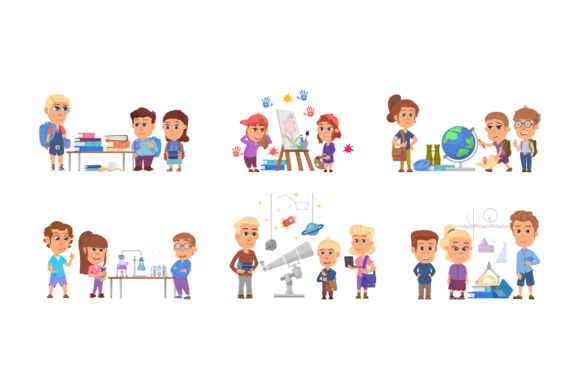
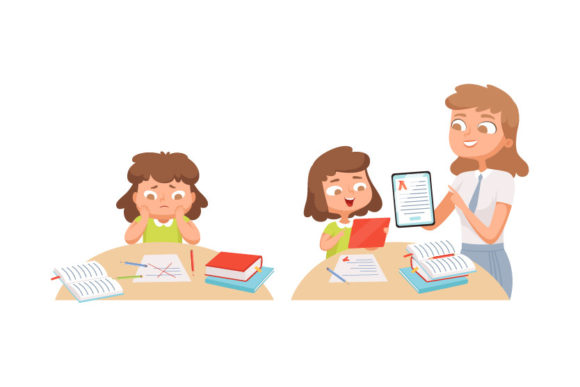
In the rapidly evolving landscape of educational design, visual communication plays a pivotal role in shaping how institutions, parents, and students perceive the learning environment. Among the myriad of graphic resources available, the depiction of a Teacher with Kids. Group of Young pupils standing in school with their young teacher has emerged as a powerful vector education concept. This specific imagery transcends mere decoration; it serves as a foundational element in branding, curriculum development, and digital interface design for early childhood education sectors. By understanding the nuances of these illustrations, stakeholders can leverage them to create more engaging, trustworthy, and effective educational materials.
The choice of vector graphics, particularly those delivered in formats like EPS within a ZIP folder, offers distinct advantages over raster images. These scalable assets allow designers to maintain crisp clarity across various mediums, from tiny mobile app icons to large-scale classroom banners. When we examine the composition of a Schoolchild kindergarten, childhood school with teacher illustration, we are not just looking at characters; we are analyzing a narrative of guidance, safety, and intellectual growth. This article explores the multifaceted utility of these educational vectors, examining their psychological impact, technical benefits, and practical applications in contemporary educational settings.
The Psychological Resonance of Youthful Mentorship Imagery
The dynamic between a teacher and students is central to the educational experience. Illustrations that feature a Teacher with Kids. Group of Young individuals capture this dynamic in a way that resonates deeply with both children and adults. For young learners, seeing peers represented in educational materials fosters a sense of belonging and relatability. It signals that the learning environment is designed for them, by people who understand their perspective. The inclusion of a young teacher in these visuals further bridges the gap between authority and approachability. Unlike traditional depictions of older, stern educators, a young teacher figure often embodies energy, modernity, and empathy.
From a parental perspective, these images convey safety and progressive pedagogy. Parents seeking kindergarten or early primary school options are often drawn to branding that reflects a nurturing yet vibrant atmosphere. A vector illustration showing a group of young pupils standing attentively yet happily with their teacher suggests a structured but joyful learning environment. This visual cue helps alleviate anxiety about school entry, a significant milestone in childhood. The aesthetic choices—bright colors, open body language, and diverse character representations—work subconsciously to build trust. Therefore, selecting the right Teacher with Kids. Group of Young graphic is not merely an artistic decision but a strategic communication tool that influences enrollment and community engagement.
Technical Advantages of Vector Education Concepts
When integrating educational imagery into professional workflows, the format of the asset is as critical as its content. Vector files, such as EPS (Encapsulated PostScript), offer unparalleled flexibility compared to pixel-based formats like JPEG or PNG. A Teacher with Kids. Group of Young vector education concept allows designers to scale the image to any size without losing resolution. This is particularly important in the education sector, where a single logo or icon might need to appear on a business card, a website header, a textbook cover, and a playground sign. The ability to manipulate individual elements within the vector file enables customization that static images cannot provide.
Receiving these assets in a ZIP folder containing EPS files ensures that users have access to high-quality, editable source material. Designers can adjust colors to match specific school branding guidelines, modify character expressions to suit different contexts, or isolate specific elements like the teacher or individual students for use in separate layouts. This modularity enhances the longevity and versatility of the design investment. Furthermore, vector files are typically smaller in file size than high-resolution raster images, which contributes to faster loading times on educational websites and apps. In an era where digital accessibility and performance are paramount, optimizing visual assets through vector graphics is a best practice that supports both user experience and SEO performance.
Diverse Applications in Educational Media
The utility of a Schoolchild kindergarten, childhood school with teacher illustration extends far beyond simple decorative purposes. These graphics serve as functional components in a wide array of educational media. In digital learning platforms, such illustrations can be used as avatars, progress indicators, or section dividers. For instance, a module on social skills might feature a vector of a Teacher with Kids. Group of Young students collaborating on a project, reinforcing the lesson’s theme visually. In printed materials, these vectors can be adapted for worksheets, certificates, and newsletters, providing a consistent visual identity that strengthens brand recognition.
- Website and App Interface Design: Using scalable vectors ensures that icons and banners look sharp on all devices, from smartphones to desktop monitors. A cheerful illustration of a teacher and students can welcome users to a portal, making the digital space feel inviting.
- Presentation Decks and Training Materials: Educators and administrators often create presentations for parent-teacher conferences or staff training. Incorporating professional vector graphics elevates the quality of these decks, making complex information more digestible and visually appealing.
- Marketing and Promotional Collateral: Brochures, flyers, and social media posts benefit from cohesive imagery. A consistent set of illustrations featuring a Teacher with Kids. Group of Young pupils helps establish a recognizable brand voice that distinguishes an institution from its competitors.
- Classroom Decor and Environmental Graphics: Large-format printing of vector illustrations can transform physical learning spaces. Wall murals or door signs featuring friendly teacher-student interactions contribute to a positive classroom culture.
Customization and Brand Alignment
One of the most significant benefits of using vector education concepts is the ease of customization. Schools and educational startups often have unique brand identities that require specific color palettes and stylistic nuances. A generic stock photo may not align with these requirements, but a vector illustration of a Teacher with Kids. Group of Young learners can be easily modified. Designers can change the clothing colors to match school uniforms, adjust skin tones to reflect the diversity of the student body, or alter the background elements to include specific school landmarks or logos.
This level of customization ensures that the visual content feels authentic and tailored to the specific audience. It avoids the "stocky" look that can sometimes detract from the credibility of educational materials. By investing in editable EPS files, institutions gain the freedom to iterate and evolve their visual language over time. As the school grows or updates its mission statement, the existing vector assets can be refreshed rather than replaced, offering a cost-effective solution for long-term brand management. This adaptability is crucial in the education sector, where consistency and trust are built over years of interaction with families and communities.
Enhancing User Engagement Through Visual Storytelling
Effective education relies heavily on engagement, and visual storytelling is a potent tool for capturing attention. Illustrations that depict a Schoolchild kindergarten, childhood school with teacher illustration tell a story of interaction, learning, and growth. These narratives help humanize abstract concepts, making them more accessible to young minds. For example, a math worksheet might use characters from the vector set to demonstrate sharing or grouping, turning a dry exercise into a relatable scenario. This approach leverages the cognitive benefits of dual coding, where information is processed both verbally and visually, leading to better retention and understanding.
Moreover, these visuals can support inclusive education practices. By carefully selecting or modifying vectors to represent children with different abilities, backgrounds, and family structures, educators can create materials that reflect the real world. A Teacher with Kids. Group of Young pupils that includes diverse representations sends a powerful message of acceptance and equity. It validates the experiences of all students and fosters a classroom environment where every child feels seen and valued. This intentional use of imagery aligns with modern pedagogical standards that prioritize social-emotional learning alongside academic achievement.
Strategic Implementation for Content Creators
For content creators, bloggers, and marketers in the education niche, incorporating high-quality vector graphics can significantly enhance the appeal and professionalism of their output. Articles, guides, and resources that feature relevant illustrations tend to have higher engagement rates and lower bounce rates. When writing about early childhood education trends, for instance, including a visual of a Teacher with Kids. Group of Young students can break up text-heavy sections and provide visual context. It also improves shareability on social media platforms, where eye-catching graphics are essential for cutting through the noise.
Creators should consider the semantic relevance of their images. Search engines increasingly understand the context of visual content, so using descriptive file names and alt text that include keywords like "vector education concept" or "kindergarten teacher illustration" can improve SEO performance. Additionally, ensuring that the style of the illustrations matches the tone of the written content creates a cohesive user experience. A playful, colorful vector set suits articles on play-based learning, while a more structured, clean design might be appropriate for discussions on curriculum standards. By thoughtfully integrating these assets, creators can produce content that is not only informative but also visually compelling and optimized for discovery.
In conclusion, the strategic use of a Teacher with Kids. Group of Young vector education concept offers profound benefits for educational institutions, designers, and content creators. From enhancing psychological connection and brand trust to providing technical flexibility and supporting inclusive storytelling, these illustrations are invaluable assets. By leveraging the scalability and customizability of EPS files, stakeholders can create dynamic, engaging, and professional educational materials that resonate with their audiences. As the demand for high-quality digital and print resources continues to grow, mastering the integration of these visual elements will remain a key competency in the field of educational design and communication.