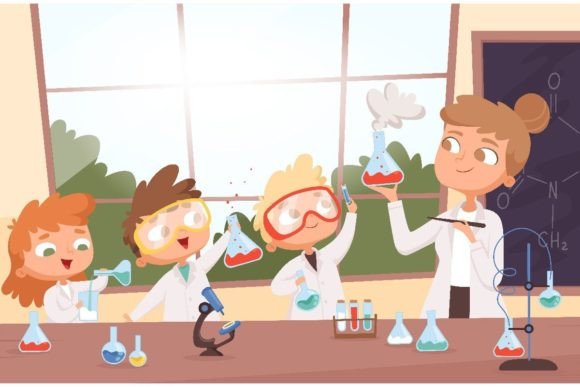
Chemistry Lesson. Little Science Kids: Inspiring the Next Generation of Innovators
Introducing children to the wonders of science at an early age is one of the most effective ways to cultivate curiosity, critical thinking, and a lifelong love for learning. The concept behind Chemistry Lesson. Little Science Kids goes far beyond simple entertainment; it represents a foundational approach to STEM education that transforms abstract concepts into tangible, exciting experiences. For parents, educators, and content creators, understanding how to effectively present chemistry to young minds is crucial. This article explores the significance of early science education, the challenges involved, and how visual resources like vector illustrations can enhance the learning environment.
The Importance of Early Exposure to Chemistry
Chemistry is often perceived as a complex subject reserved for high school or university students. However, the principles of chemistry are present in everyday life, from baking cookies to watching leaves change color in autumn. By introducing these concepts through the lens of Little Science Kids, we demystify the subject and make it accessible. Young boys and girls are naturally inquisitive. They ask "why" and "how" constantly. Leveraging this innate curiosity through structured yet playful chemistry lessons helps build a strong cognitive framework for future academic success.
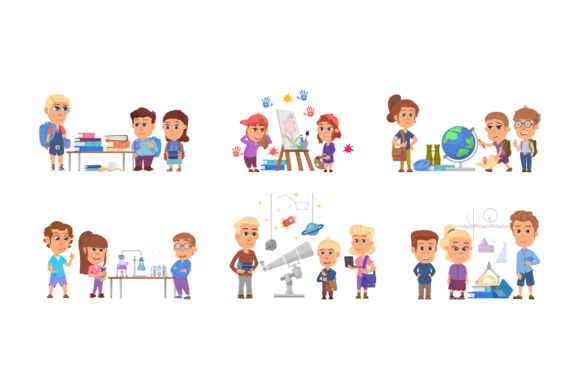
When children engage in safe, supervised experiments, they learn more than just chemical reactions. They develop essential skills such as observation, hypothesis testing, and data analysis. The imagery of school chemistry education, featuring boys and girls in laboratory settings, serves as a powerful visual cue that science is inclusive and collaborative. It breaks down gender stereotypes and encourages all children to see themselves as capable scientists.
Challenges in Teaching Science to Young Learners
Despite the benefits, teaching chemistry to younger audiences comes with distinct challenges. Safety is the primary concern. Traditional laboratory equipment and chemicals are not suitable for small hands. Educators and parents must find ways to simulate the laboratory experience without exposing children to hazardous materials. This is where the role of visual aids and conceptual learning becomes vital.
Another challenge is maintaining engagement. Abstract molecular structures and periodic tables can be dry and intimidating for children. If the material is too theoretical, interest wanes quickly. The goal is to bridge the gap between theory and practice. This is where resources like the Chemistry Lesson. Little Science Kids vector background illustrations become invaluable. These visuals provide a context that is both educational and appealing, helping to sustain attention and spark imagination.
How Visual Resources Enhance Learning
Visual learning is a dominant style for many children. The use of cartoon-style vector illustrations depicting boys and girls making research tests in a school lab creates a relatable narrative. When children see characters who look like them engaging in scientific inquiry, it validates their own interests. The ZIP folder containing EPS files offers high-quality, scalable graphics that can be used across various platforms, from classroom posters to digital presentations.
These illustrations are not merely decorative; they are instructional tools. They can be used to label parts of a safe experiment setup, illustrate the steps of the scientific method, or create storytelling sequences that explain chemical changes. For example, an image of a boy and girl mixing safe solutions can be paired with text explaining color changes due to pH levels. This multimodal approach reinforces learning by connecting visual cues with textual information.
Practical Applications for Educators and Parents
Implementing the concepts behind Chemistry Lesson. Little Science Kids requires a blend of creativity and structure. Here are several practical ways to utilize these resources and ideas:
- Classroom Decor and Materials: Use the vector illustrations to create engaging wall displays. Labeling different stations in a classroom science corner with images of children performing tasks helps establish routines and expectations.
- Digital Content Creation: For online tutors or educational bloggers, the EPS files can be integrated into slideshows, videos, and interactive quizzes. High-quality graphics improve the professional appearance of educational materials, making them more appealing to both students and parents.
- Storytelling and Role-Play: Encourage children to act out the scenes depicted in the illustrations. Role-playing as scientists helps internalize the behaviors of inquiry and collaboration. You can create simple narratives where the characters solve a mystery using chemical clues.
- Worksheet Design: Incorporate the cartoon characters into worksheets that guide children through simple, safe experiments. For instance, a worksheet might feature the girl character holding a magnifying glass, prompting the student to observe and record details about a leaf or a rock.
Tailoring Approaches for Different Users
Different stakeholders will approach Chemistry Lesson. Little Science Kids with unique goals. Homeschooling parents may focus on integrating these visuals into a broader curriculum, using them to break up text-heavy lessons and add variety. They might use the illustrations to create custom flashcards or reward charts for completing science modules.
School teachers, on the other hand, might use the resources to foster a sense of community in the classroom. By displaying images of diverse children working together, teachers can promote inclusivity and teamwork. They might also use the vector backgrounds as templates for student projects, allowing children to insert their own photos or drawings into the lab setting.
Content creators and designers will appreciate the technical flexibility of the EPS format. Scalability ensures that the images remain crisp whether used on a business card or a large banner. This versatility allows for consistent branding across educational products, websites, and marketing materials.
Safety and Ethical Considerations
While the enthusiasm for science is encouraging, it is imperative to emphasize safety. The illustrations depict a controlled school lab environment, which should serve as a model for real-world activities. Always ensure that any hands-on experiments conducted by children are age-appropriate, supervised, and use non-toxic materials. Common household items like vinegar, baking soda, and food coloring can provide exciting chemical reactions without risk.
Furthermore, it is important to present science as a process rather than just a set of facts. Encourage children to ask questions, make mistakes, and try again. The characters in the Little Science Kids illustrations should be seen as explorers who are learning through discovery. This mindset fosters resilience and a growth-oriented attitude toward learning.
Conclusion
The journey into science begins with a single question. By leveraging resources like Chemistry Lesson. Little Science Kids, adults can provide the scaffolding necessary for children to explore, experiment, and excel. The combination of engaging visual content and practical educational strategies creates an environment where learning is both fun and meaningful. Whether you are a teacher designing a new unit, a parent looking for homeschooling aids, or a creator developing educational products, these tools offer a pathway to inspire the next generation of scientists. Embrace the opportunity to make chemistry accessible, enjoyable, and visually stimulating for young learners.